ODAITO NEST おだいとうネスト
-野付半島まで10分の個室ゲストハウスー

ODAITO NEST おだいとうネスト
-野付半島まで10分の個室ゲストハウスー

Eastern Hokkaido, known locally as Doto, is too big to see properly in two or three days. Give it five, and you’ll actually get to stand in front of things instead of just driving past them. This route takes you from Memanbetsu Airport in the north down to Kushiro Airport in the south, tracing sulfur mountains, sea cliffs, a UNESCO World Heritage peninsula, and a wetland the size of a small city along the way. It’s the itinerary locals actually recommend to friends visiting for the first time — trimmed down to what’s genuinely worth your time.
Before you go: rent a car. Public transit barely touches most of this route, and the driving itself — past dairy farms, drift-ice coastlines, and mountain passes — is half the experience.
You’ll land at Memanbetsu Airport and spend the day working your way northeast toward the mountains, ending the night soaking in one of Japan’s few genuinely untreated hot spring towns.
Route: Sunflower field near the airport → Merhen no Oka hill → Abashiri Prison Museum (lunch) → Okhotsk Ryuhyo Kan → overnight in Kawayu Onsen
Two and a half hectares just north of the airport erupt into roughly 400,000 sunflowers every August, and because they sit directly under the flight path, you can catch a plane lifting off right through the yellow. Flights here are infrequent, so if you want that exact shot, check the Memanbetsu Airport flight schedule before you go. Bloom window: mid-to-late August. Free, roadside parking available.
Seven larch trees stand spaced along a ridge, a patchwork of farmland rolling out in front of them and nothing but sky behind. Akira Kurosawa filmed a scene from Dreams here, and it’s easy to see why — the view changes completely with the seasons: bright green wheat shoots in spring, white potato blossoms in summer, gold in autumn. It’s a seven-minute drive from the airport, just off Route 39. Free, open year-round. Note: it’s a 1-minute drive (11-minute walk) from the Memanbetsu Merhen no Oka roadside rest stop — don’t assume it’s next door.
This working Meiji-era prison was relocated wholesale onto a site the size of three and a half Tokyo Domes, and several of its buildings are now Japanese Important Cultural Properties. It’s become newly popular with anime fans since it appeared in Golden Kamuy, but the history alone is worth the stop. For lunch, the on-site cafeteria serves an exact replica of what’s currently served to inmates in Abashiri’s still-operating prison next door — genuinely good, and a strange way to spend an hour. ¥1,500 adults / ¥750 children (ages 6-15). Prison lunch: ¥950 extra. Open 9:00–17:00 (last entry 16:00), closed Dec 31–Jan 1. Free parking.
This museum keeps 100 tons of actual sea ice from the Sea of Okhotsk in a walk-in freezer room year-round, alongside live clione (the tiny “sea angels” that drift with the ice) and wolf-eels. Climb to the third-floor observation deck for a 360° panorama over three lakes, the Shiretoko mountains, and the Okhotsk coast. Before you leave, get the salted caramel soft-serve at the ground-floor café — it’s made with Okhotsk sea salt and supervised by Rimo, a gelato shop 7 minutes away that’s won international competitions twice. You won’t find this flavor anywhere else. ¥990 adults. Open 8:30–18:00 (May–Oct) / 9:00–16:30 (Nov–Apr). Free parking.
An hour from the museum, Kawayu is heated by Mt. Io, an active sulfur volcano, and every bath here runs on fresh, unfiltered, unrecirculated spring water — a genuine rarity in Japan, certified by the Japan Genuine Hot Spring Association. You’ll smell the sulfur before you see the steam rising off the stream that runs through town. Try Oyado Kinki for its three-temperature communal baths, or Kawayu Kanko Hotel for the only rooftop bath with a view in town.
Today runs east through the volcanic heart of Doto — Kussharo, Mashu, and Iōzan — before crossing into Shiretoko National Park.
Route: Kussharo Lake Sunayu → Lake Mashu First Observatory → Mt. Io → lunch in Kawayu → Sakura Falls → Kamunokoike Pond → Oshinkoshin Falls → Furepe Falls → Shiretoko Nature Center → Yuhidai sunset viewpoint → overnight in Utoro
Japan’s largest caldera lake has cobalt-blue water and a strange party trick: dig into the sandy shore at Sunayu beach and hot spring water bubbles up right where you’re standing. Bring a small shovel, or just use your hands. If you’re short on time, there’s a free foot bath near the swan-boat dock instead. Free, open 24 hours. Free parking for 150 cars.
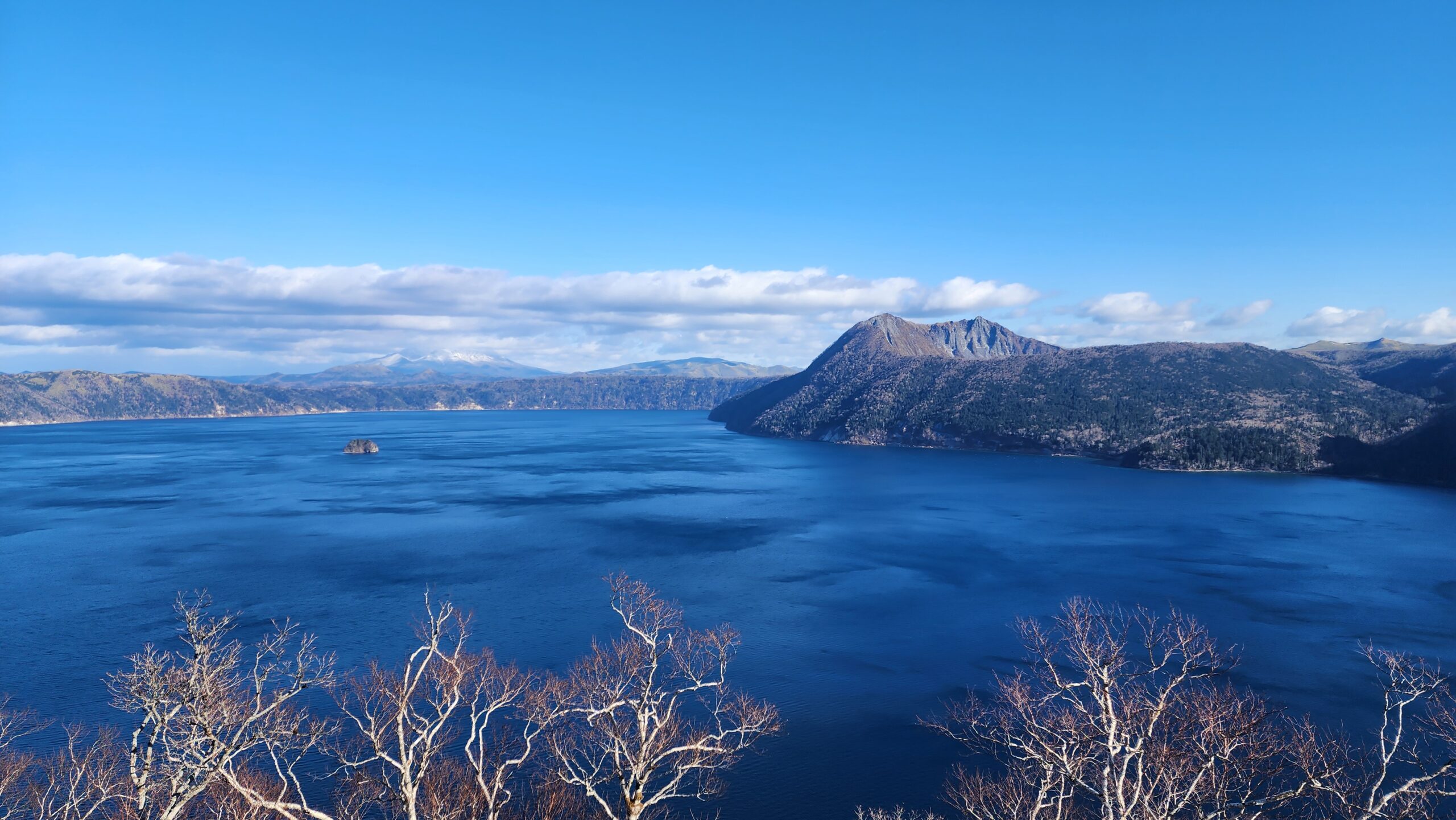
Ainu tradition calls this “Kamuy-to,” the lake of the gods, and the color has its own name here — “Mashu blue.” At the First Observatory (the main and most-visited of three viewpoints), grab a mint-flavored Mashu Blue soft-serve at the attached Kamuy Terrace café and take in a lake so clear it looks lit from within. Observatory free, open 24 hours. Café 8:30–17:00. Paid parking May 1–Oct 31 only (¥500 cars).
Its Ainu name means “bare mountain,” and it earns it: brown, sulfur-streaked slopes vent white steam close enough to feel the heat. It was mined for sulfur from the 1870s through the mid-20th century; today it just feeds the hot springs downhill. Grab a hot-spring-steamed egg at the rest house for a snack. Shared parking pass with Lake Mashu Observatory (one use each), May–Oct only.
On Kawayu Onsen’s main street, this wood-lined café is easy to linger in. Order the Mashu galette, made with locally grown buckwheat and topped with local vegetables and cheese, or the Mashu pork curry — mild, so the pork’s natural sweetness comes through, with chunks of potato throughout. 11:30–21:00, closed Thursdays.
From June through August, cherry salmon fight their way up this waterfall to spawn, throwing themselves against the current in bursts you can watch from the bank. It’s a small thing, but it’s hard not to root for them. Free, open year-round in season. Free parking for 60 cars.
This shallow, five-meter-deep pond is fed by underground water filtering out of Lake Mashu, and it glows the same improbable blue. Fallen logs rest on the bottom without rotting, and Dolly Varden char — found only in Hokkaido — dart between them in flashes of orange. It’s a five-minute walk from the parking lot. Free. Free parking for 30 cars.
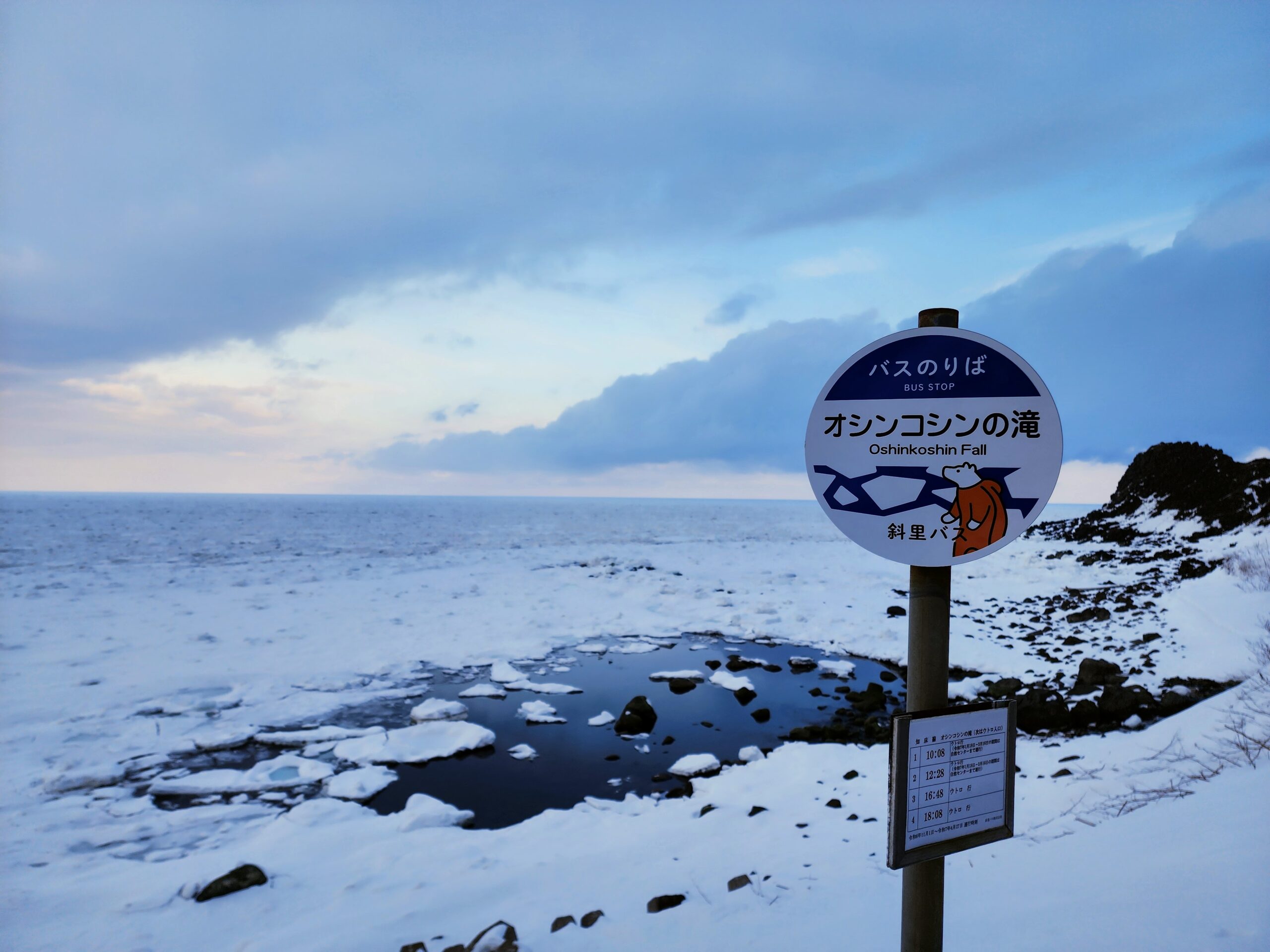
A staircase climbs partway up alongside this waterfall, close enough that you’ll feel mist on your face. It’s one of the “Shiretoko Eight,” the peninsula’s official must-see list.
Unlike most waterfalls here, Furepe has no river feeding it — just rain and groundwater seeping through the cliff face, which is why it barely trickles even at its fullest. From the 20-minute walk out from the Nature Center parking lot, you’ll look down over the Okhotsk Sea with the Shiretoko mountains behind it, and cormorants and gulls nesting in the cliffs below.
Stop here before heading further into the park. Bear-safety information, trail conditions, and bear-spray rentals are all handled here, and you can actually run your hand through a real brown bear pelt on display. Free entry. Open 8:00–17:30 (Apr 20–Oct 20).
Right in Utoro’s onsen town, this viewpoint looks over the harbor as the sun drops into the Okhotsk Sea, turning the whole bay orange.
This is Shiretoko’s main gateway town, split between a harbor-level area and a hillside area. The water here is sodium chloride-bicarbonate, said to be good for sore muscles after a long day of driving. KIKI Shiretoko Natural Resort, up on the hill, leans into Scandinavian-style hygge hospitality; Kitakobushi Shiretoko Hotel & Resort is walkable from the harbor.
This is the wildest day of the trip — the mountain pass separating Shiretoko’s two coasts, a genuine hot-spring waterfall you climb into, and a boat trip with real odds of seeing a whale.
Route: Kamuiwakka hot spring falls → Shiretoko Five Lakes → Shiretoko Pass → lunch at Michi-no-eki Shiretoko Rausu → Shiretoko Nature Cruise → Shibetsu Salmon Museum → Kaiyodai → overnight near Shibetsu/Odaito
Kamuiwakka’s river runs naturally hot, and hiking up alongside it — 60 to 90 minutes round trip — takes you past a series of falls where the water gets progressively warmer. The first pool sits around 25°C; by the fourth and final one, it’s 35-38°C, warm enough to actually soak in. Sandals work fine as far as the first falls, but you’ll want water shoes (rentals available) to make it all the way up, and a swimsuit if you want to get in. Booking is required in advance, and it only runs July 1–September 30. Wear clothes you don’t mind getting soaked.
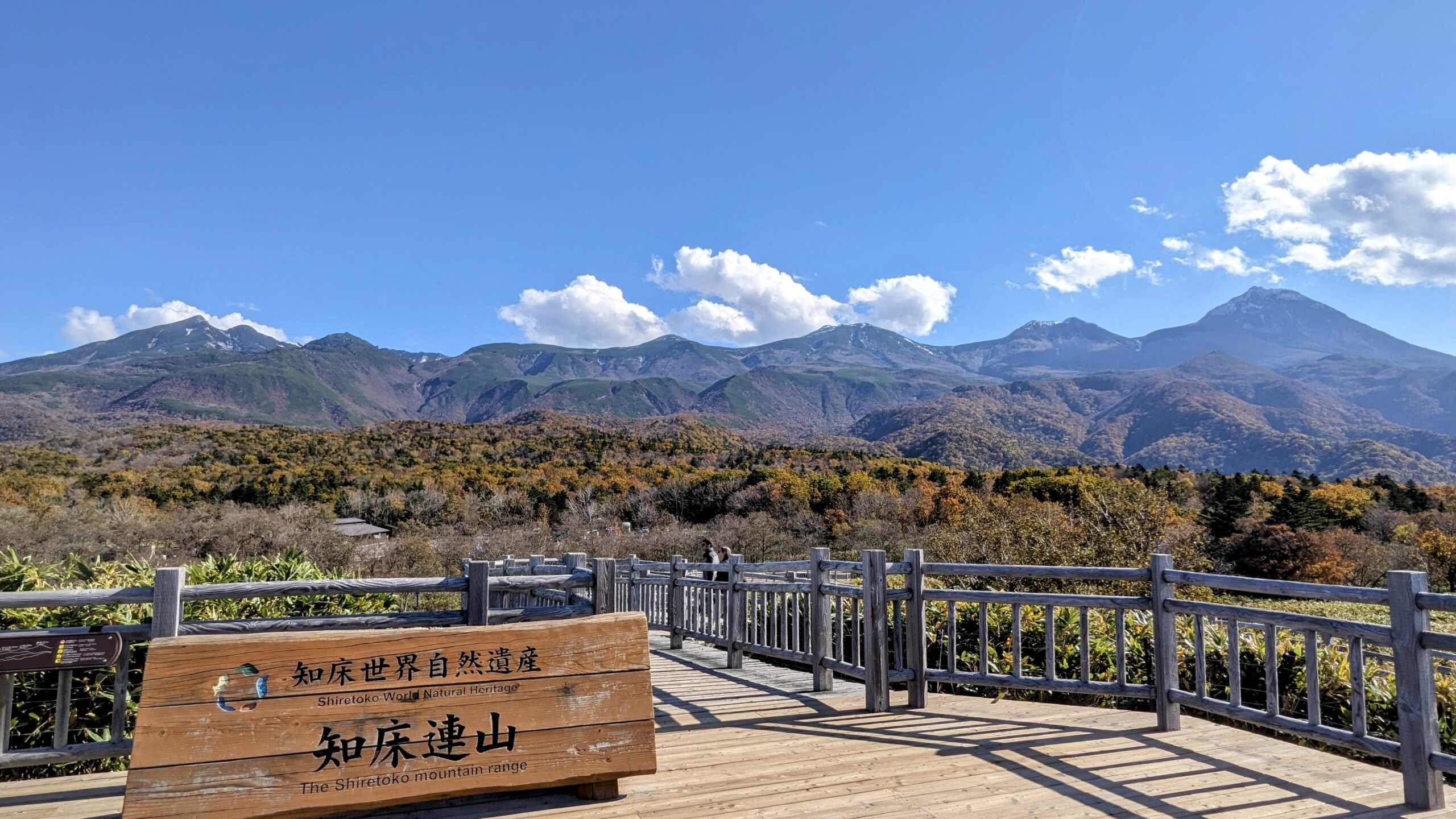
An 800m elevated wooden walkway (1.6km round trip, about 40 minutes) loops out to the first of five forest lakes, with the Shiretoko mountain range reflected in the water and the Okhotsk Sea visible beyond. Because it’s electric-fenced, it stays open even when bears are active nearby — unlike the ground-level trail looping all five lakes, which requires a certified guide during peak bear season (May 10–July 31). The boardwalk is wheelchair-accessible, though you can’t access the ground trail from it. Adults ¥500 cars. Open 8:00–18:30, hours vary by season.
At 738m, this pass marks the boundary between Utoro and Rausu, with Mt. Rausu rising directly ahead and a sea of green forest falling away below. On a clear day, you can see Kunashiri Island — Russian territory — just 26km across the water. The weather up here changes fast, so bring a jacket even in August. Closed in winter. Free parking for 66 cars.
A michi-no-eki is a Japanese roadside rest stop, usually combining a tourist information desk with local food and shopping — this one is Rausu’s best. Upstairs, Shiretoko Shokudo serves a sea urchin rice bowl and a seafood bowl, plus two dishes you won’t find elsewhere: kelp-broth ramen made with Rausu’s famous kombu, and a rice bowl topped with black conger eel. The information desk here is also where you’ll want to confirm cruise bookings.
From late April through mid-October, this boat runs out of Rausu Port looking for sperm whales, dolphins, and orcas in the strait. Nothing is guaranteed — they’re wild animals — but the captain and crew know these waters intimately and will help you spot and identify whatever surfaces. You must pick up your ticket in person at the Nature Cruise office behind the Michi-no-eki before boarding — it’s a 2-minute drive or 5-minute walk from the rest stop. Pets aren’t allowed onboard but can be looked after (in a carrier) at the office. Adults ¥8,800 / children ¥4,400. Free parking.
About 50 minutes south, in a town that lands some of Hokkaido’s largest salmon catches, this aquarium mixes serious fish-watching (a large saltwater tank, plus a tank stocked with species from the Nemuro Strait) with hands-on moments — sturgeon-finger-nibbling, doctor fish, and feeding sessions for the resident Sakhalin taimen. It’s a good stop if you’ve got kids along. Adults ¥650. Open 9:30–17:00, closed Wednesdays (Feb/Mar/Apr/Nov), closed Dec–Jan.
Only 270m up, but the surrounding land is entirely grazing pasture, so the view is uninterrupted in almost every direction — grassland to the Nemuro Strait, and on a clear day, Kunashiri Island again in the distance. With no light pollution and nothing blocking the sky, it’s known locally as one of the best sunrise, sunset, and stargazing spots in the region.
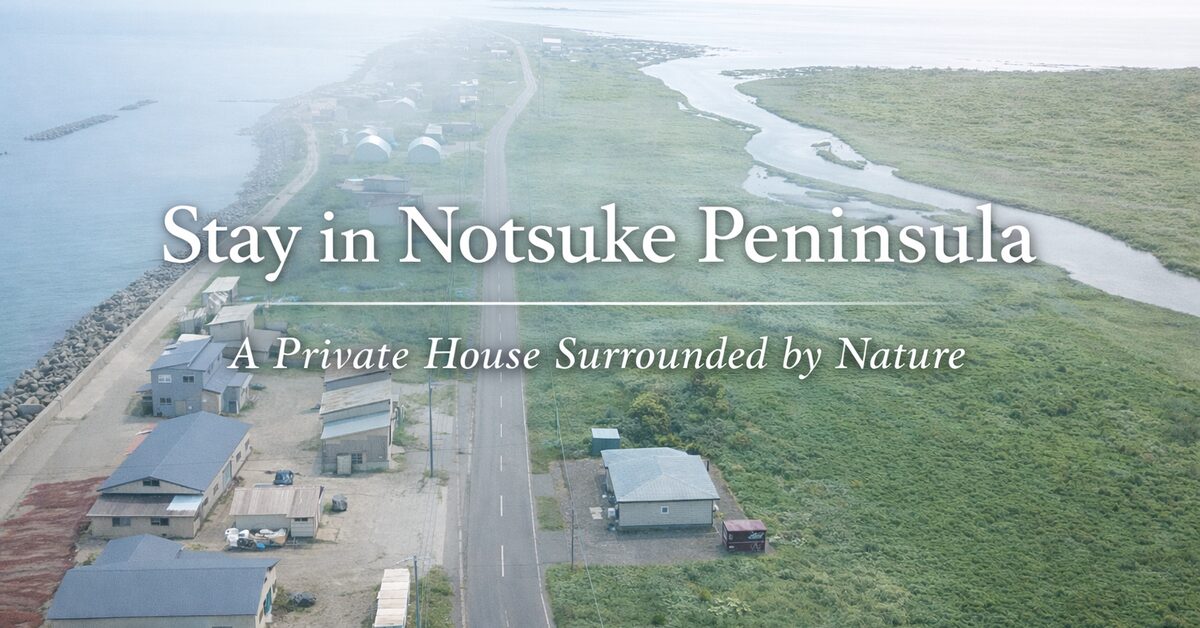
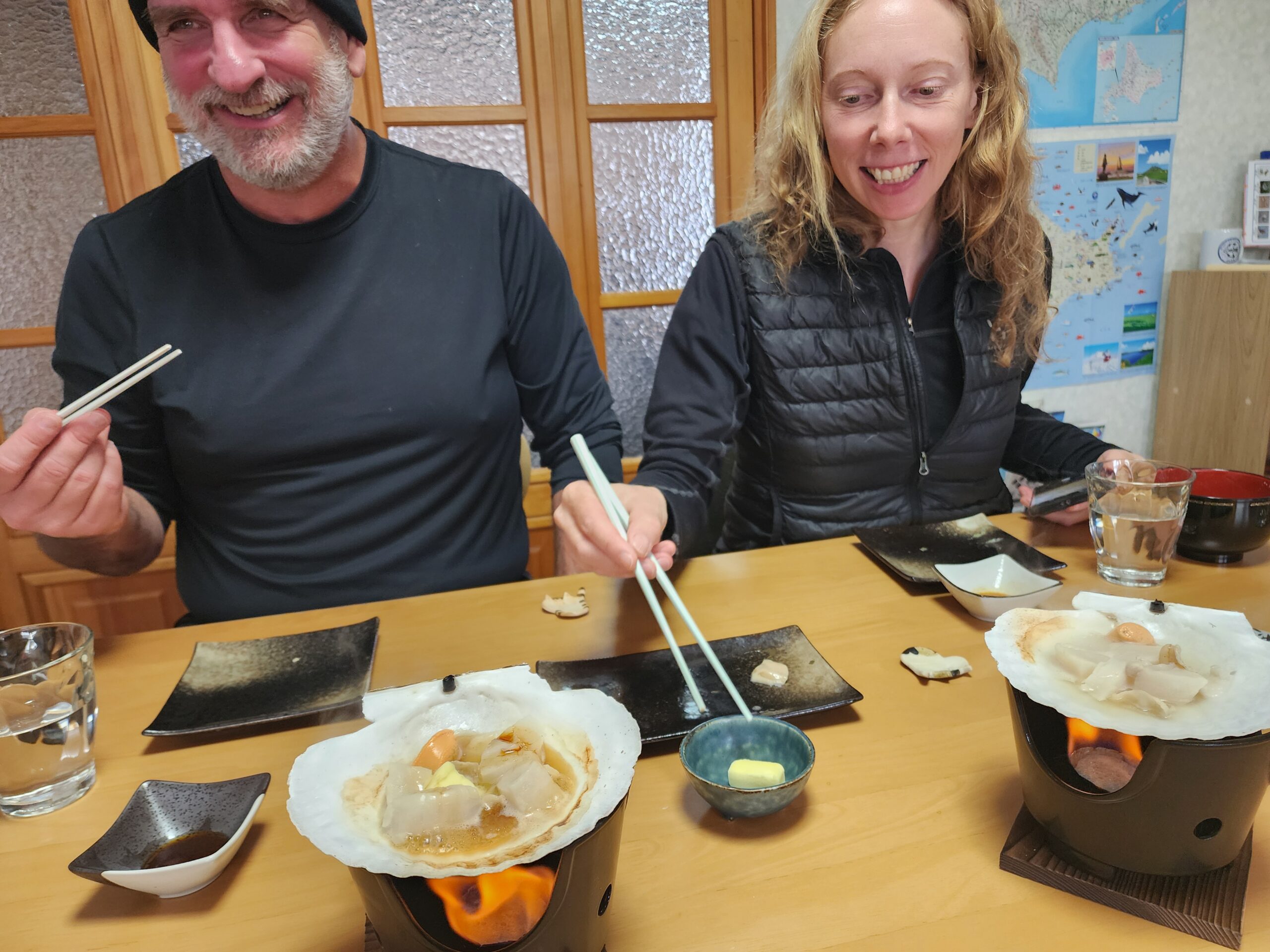
Tonight’s base sets you up for tomorrow’s Notsuke Peninsula visit. For something different from the last two nights’ hot-spring hotels, consider a small stand-alone cottage at Forest-House Ranapirica, or Odaito Nest, a small guesthouse near the peninsula run by a local who moved from Tokyo to Betsukai.
Notsuke Peninsula in the morning, then a long, scenic push south along a string of capes toward Kushiro.
Route: Notsuke Peninsula drive-through → Notsuke Peninsula Nature Center → lunch at Michi-no-eki Swan 44 Nemuro → Ochiishi Cape → Kiritappu Cape → Namida Misaki (Tears Cape) → Aikappu Cape → Nusamai Bridge → overnight in Kushiro
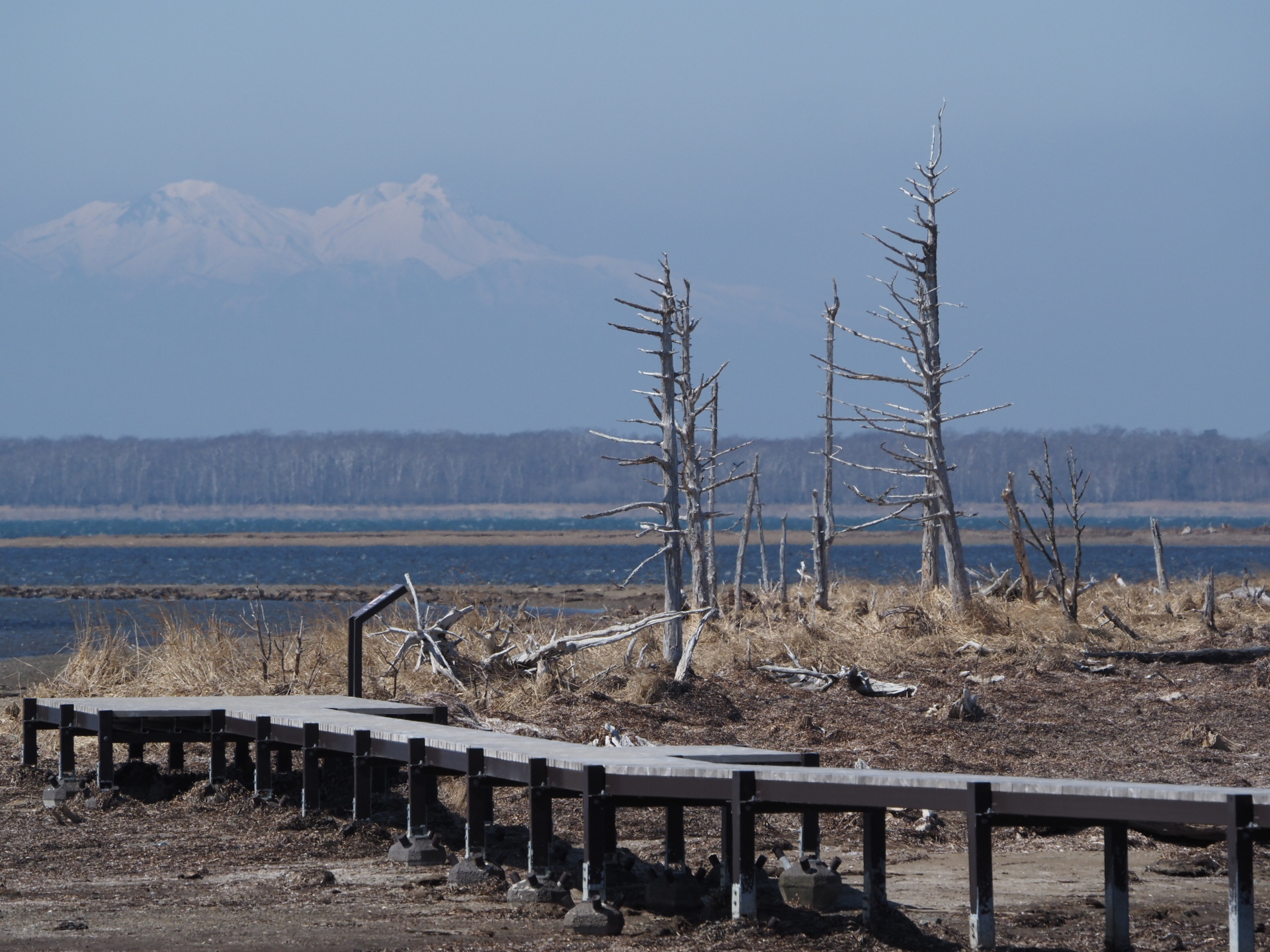
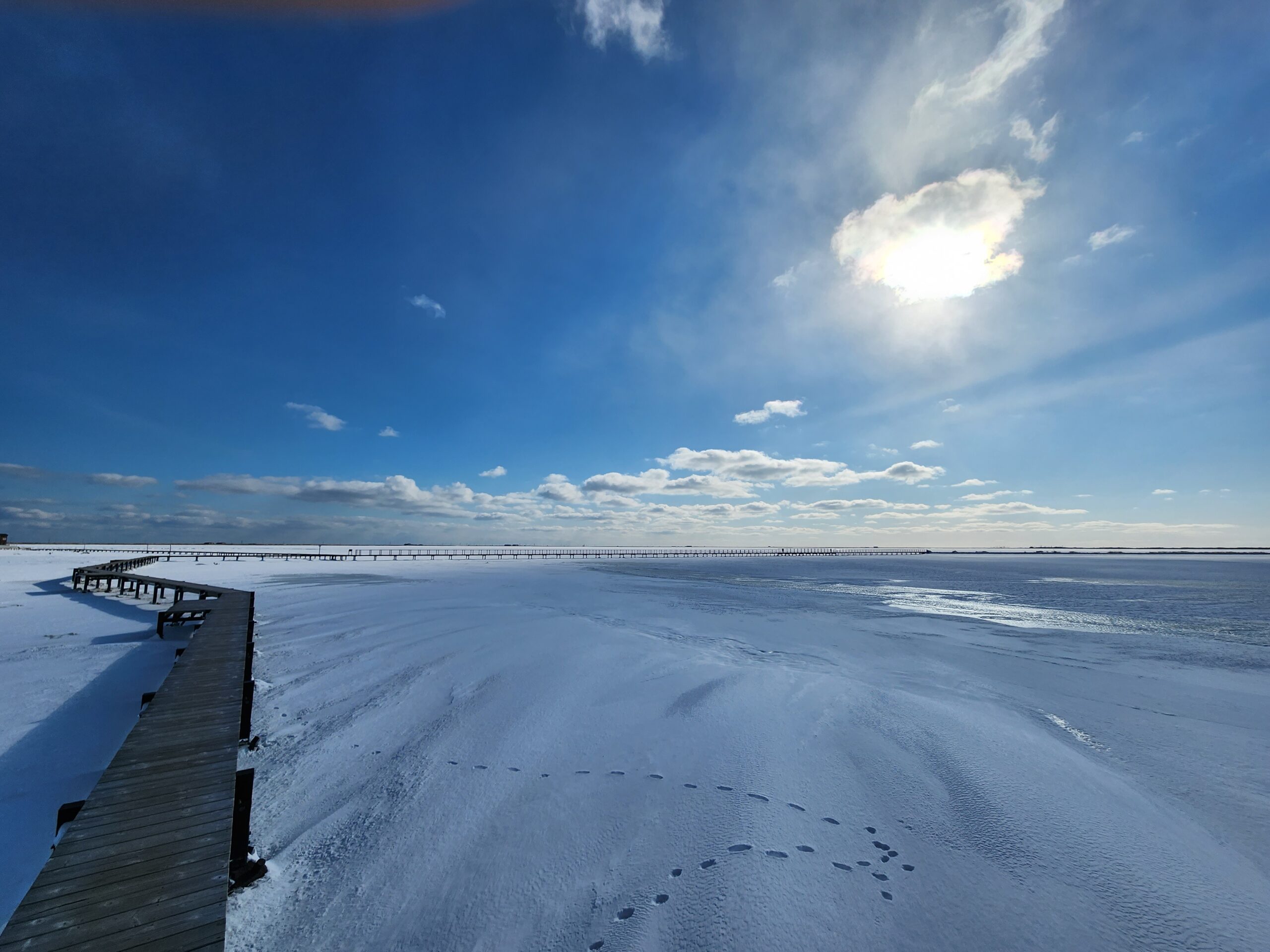
As you drive out toward the tip, you’ll pass Narawara on your right — a stand of oak trees killed by rising saltwater, bleached and bare against the sky, genuinely eerie in a good way. Further out, past the Nature Center, a boardwalk leads to Todowara: once a fir forest, now a graveyard of dead standing trees, slowly being ground down by wind and erosion until — locals say — nothing will be left. Walk to the end and you’ll reach a small pier that genuinely feels like the edge of the world. Push on to Notsukesaki Lighthouse (also called Ryujin-saki Lighthouse) at the very tip, where in summer the barren landscape gives way to wild rugosa roses and Japanese irises blooming purple and orange against green grass — and a white lighthouse standing completely alone under open sky.
This visitor center covers the science and history of the sandspit itself, alongside a shop selling local goods — including Betsukai’s white “Notsuke scallop curry,” found nowhere else — and a restaurant serving a jumbo scallop burger made with the town’s famous catch. In summer, book the round-trip Todowara walking tour (about 100 minutes) for a guided look at the peninsula’s plants, birds, and wildlife along the boardwalk. Reservations required. Free entry. Open 9:00–17:00 (Apr–Sep). Tour: adults ¥4,300.
If you have extra time, a sightseeing boat runs out of nearby Odaito port May through October, with routes toward Notsuke Peninsula or out to spot wild seals — worth it if you catch a glimpse of one.
Mainland Japan’s easternmost roadside station overlooks Lake Furen, a Ramsar-listed wetland. Note: it’s named for the whooper swans that gather here — but only in spring and autumn, so don’t expect to see any in summer. The glass-walled restaurant is worth the stop regardless: try the escalope, a Nemuro specialty of breaded pork or beef in demi-glace sauce, or ramen topped with hanasaki crab.
The cape itself is a protected environmental area, so you’ll park at a gate and walk 2km each way along a wooden boardwalk. It cuts through native azalea (a nationally protected plant) and windswept grassland before ending at a 40-meter cliff crowned by Ochiishi Lighthouse, one of Japan’s 50 designated “lighthouses worth visiting.” Sika deer often graze nearby, and in summer, sea fog can roll in and blur the whole scene into something that barely looks like Japan at all.
This is one of the best spots in Japan to see wild sea otters, and locals sometimes call it “Tokkari Cape” after the Ainu word for seal, since those turn up often too. The path out to the lighthouse is genuinely colorful in summer — day lilies, blue flag iris, and other wildflowers bloom right along the trail. Fog is common here too, true to the town’s name (kiri means fog).
A ten-minute walk across open grassland from the parking lot, with nothing but wind and the sound of waves against the cliffs. The name comes from a local legend about a girl weeping for a young man lost at sea in a storm — a nearby rock formation, Tateiwa, is said to be him, still turned toward her.
An 80-meter cliff over Akkeshi Bay, with Daikoku Island (a seabird colony) visible offshore. At the tip, there’s a bell — ring it, and legend says your wish comes true. It’s a popular stop for couples for exactly that reason. Visitor center open 10:00–15:00, May 1–Oct 31 (closed Mondays).
Sailors who’d traveled the world once ranked Kushiro’s sunset among the three most beautiful anywhere, and on a clear evening over this bridge, it’s easy to believe them — the harbor turns orange and the bronze statues along the railing go dark in silhouette. Reality check: Kushiro is nicknamed “the city of fog,” and summer fog rolls in often enough that a clear sunset here is genuinely a matter of luck. Even without one, the bridge is worth a walk after dark — the lights reflecting off the river make for a quiet, unhurried scene.
For dinner, skip the hotel restaurant and try Kushiro-style ramen (a regional variation with a soy-based broth) or the city’s beloved “spakatsu” — spaghetti topped with a breaded pork cutlet — a local comfort-food combination you won’t find outside Kushiro. Robatayaki, tabletop open-fire grilling that originated here, is another good option. For a livelier night, Akachochin Yokocho (“red lantern alley”) is said to be Hokkaido’s oldest food-stall district, packed with small, distinct bars and eateries.
Your last day is built around three things you genuinely can’t do anywhere else in Japan: watch red-crowned cranes up close, ride a sightseeing train through the country’s largest wetland, and paddle out of it by canoe.
Route: Washo Market (breakfast) → Kushiro Tancho Crane Reserve → Kushiro Marsh Norokko sightseeing train → canoe tour from Toro
The market’s specialty is katte-don — literally “as-you-please bowl.” Buy a bowl of rice at one stall, then walk the market picking whatever fresh seafood you want from the vendors around it: sea urchin, salmon roe, shrimp, scallops, or just one type of fish piled high. Sushi rice is available at some stalls if you prefer it, and raw fish isn’t required — Ichibatei, inside the market, serves grilled and simmered fish if you’d rather skip it. Check the market’s official website for a discount coupon before you go. Open 8:00–17:00.
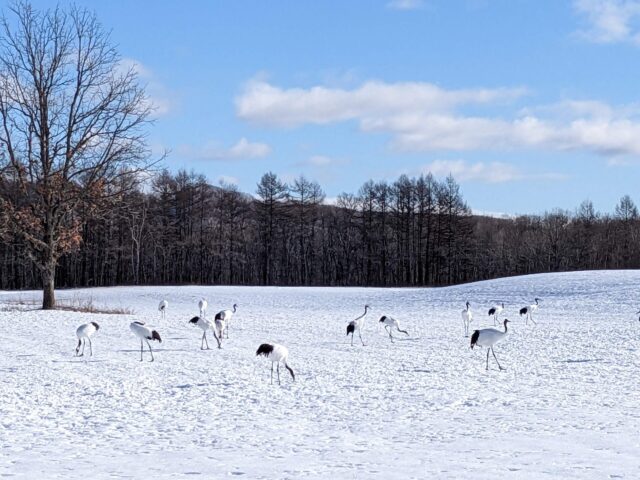
Red-crowned cranes are visible here year-round, protected in a conservation program that lets you watch them at close range through the fencing. In Japan, cranes mate for life, which has made them a symbol of a happy marriage — and if you visit in May or June, chicks are often hatching, occasionally with both parents visible caring for them together. Check the reserve’s website in advance for the latest chick updates. Adults ¥480, students ¥110. Open 9:00–18:00 (Apr 10–Oct 14).
This slow, open-window sightseeing train runs right through Kushiro Marsh, Japan’s largest wetland — deer and cranes are often visible from your seat. Book a seat in one of the three observation cars rather than the standard car; families do well with the boxed seating, couples and pairs of friends tend to prefer the bench seats. You can bring a boxed lunch from Kushiro Station to eat onboard, or buy one from the onboard cart. Runs late April–early October (check exact dates). One-way fares: Kushiro–Kushiro Shitsugen Sta. ¥440, Kushiro–Toro Sta. ¥640 (reserved observation seat: +¥840).
Several operators run canoe tours that pair directly with the Norokko train, launching from Toro or Hosooka stations and paddling out through the marsh. Exact routes and drop-off points vary by company — some end back in central Kushiro, others require a short taxi ride back to the station — so confirm the details when you book.
Fog is normal here in summer, and it can roll in fast enough to blank out a viewpoint you drove an hour to reach. If that happens, don’t take it personally — it’s just Doto in July and August. Drive a little slower than you’re used to when it’s thick.
Bring a jacket even in peak summer. Mornings and evenings turn cold fast, especially up on the passes.
Watch for deer at dawn and dusk — they cross roads often, and collisions are a real risk on rural stretches.
Gas stations can be dozens of kilometers apart. Fill up whenever you see one below half a tank; don’t assume the next one is close.
Bring binoculars if you want a real look at wildlife from a distance — eagles, deer, and seals are often visible but far off.