ODAITO NEST おだいとうネスト
-野付半島まで10分の個室ゲストハウスー

ODAITO NEST おだいとうネスト
-野付半島まで10分の個室ゲストハウスー
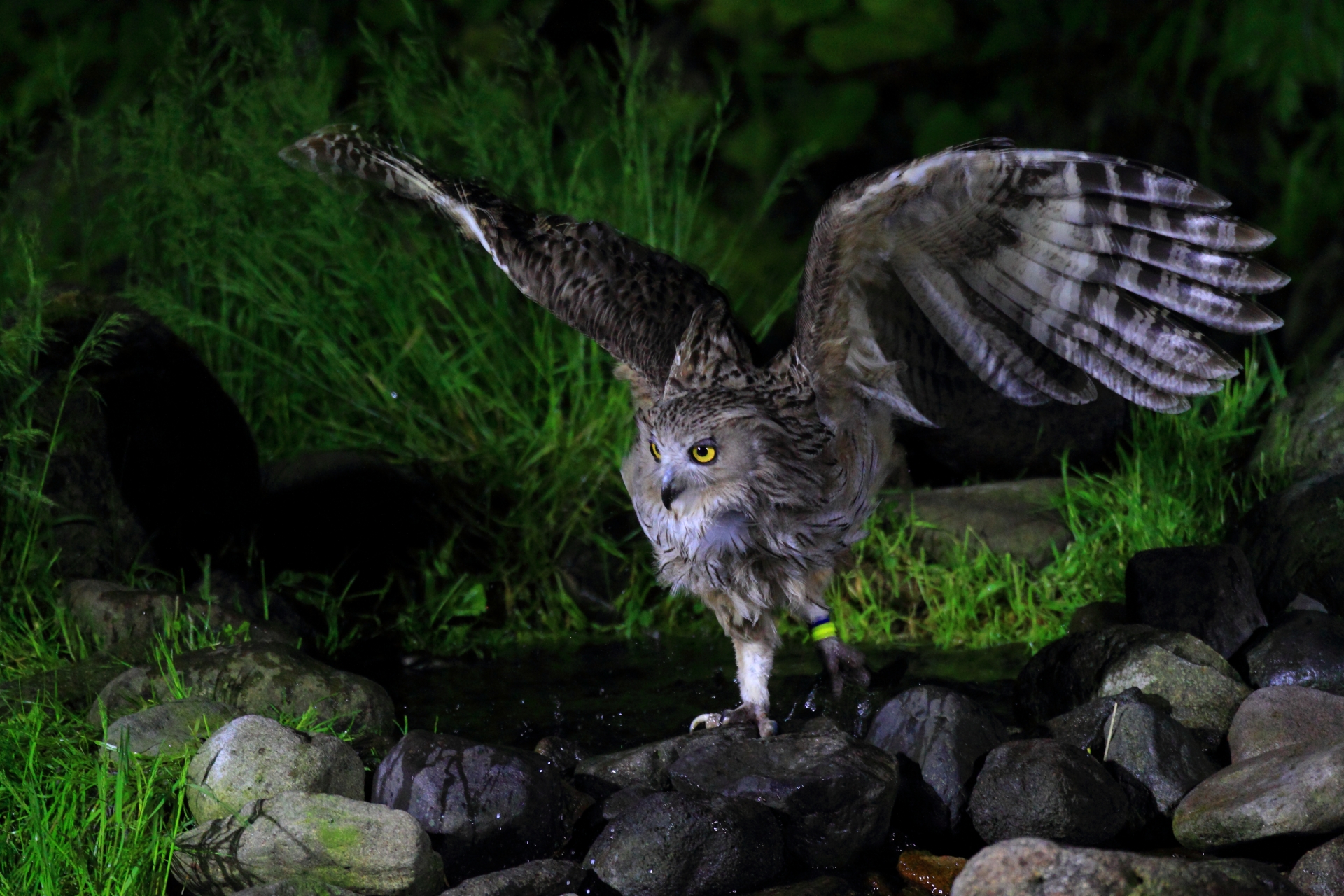

The world’s largest owl fishes for trout on a river fifteen minutes outside Rausu, most nights of the year, and you can watch it from a heated hut without booking a package tour. Almost every English-language article about Blakiston’s fish owl treats this as something you buy through a birding operator for several thousand dollars. It isn’t. The lodge that makes the sighting almost guaranteed takes bookings directly, by phone, in Japanese only — and that single detail is why most independent travelers never try.
This guide covers exactly what a resident of eastern Hokkaido would tell you before you call.
Blakiston’s fish owl (シマフクロウ, Shima Fukurou) is critically endangered, with roughly 140 individuals estimated to remain in Japan, almost all of them in Hokkaido. It stands close to 70 cm tall with a wingspan approaching 180 cm — heavier and bulkier than most people picture when they hear “owl.” In Ainu tradition it’s known as Kotan Kor Kamuy, the guardian god of the village, and it was revered rather than hunted.
The bird hunts trout and char in shallow river pools, which is the entire reason a reliable viewing site exists at all.
In 1989, a minshuku called Washinoyado (鷲の宿, “Eagle’s Inn”) opened on the former site of a fish-processing plant on the Chitorai River, just outside Rausu. Guests noticed a fish owl visiting the river on its own. Word spread, photographers began building small stone weirs to hold fish in place, and the owl kept coming back. The inn eventually formalized this into a managed feeding pool with soft, dusk-toned lighting that doesn’t disturb the bird’s night vision — and now built a heated observation hut, separate from the guest rooms, that seats around 30 people.
The result: on all but the worst storm nights, a fish owl shows up. Not “might.” But when it shows up is genuinely unpredictable. The official viewing window runs from about thirty minutes after sunset until the lights switch off at midnight, and the owl can appear at any point inside that window — sometimes within the first half hour, sometimes not until you’re ready to give up around 11 p.m. Guest reports describe both patterns: some see the owl arrive almost immediately after dark and return several times before midnight; others watch it appear once early in the evening, disappear for hours, and come back only in the final stretch before the lights go out. Treat the whole window as the commitment, not just the first hour or two — the owl doesn’t know your bedtime.
The catch: the inn has no English website, no email booking, and — as of this writing — the reservation process runs entirely through a phone call in Japanese. This is the single biggest reason English-speaking travelers give up before they start.
If you don’t speak Japanese, the realistic options are: ask a Japanese-speaking friend or your accommodation elsewhere in Hokkaido to call on your behalf, or use a real-time translation call service. Email inquiries generally go unanswered — this is a small, owner-run operation, not a hotel with a booking system.
Two ways to visit:
1. Stay overnight. Sources vary on the exact figure — expect somewhere in the ¥11,000 per person range for one night with dinner and breakfast, subject to season and room. There are only four rooms, ten guests total, so this books out well ahead during peak owl season.
2. Observation only, no stay. You can use the heated observation hut for roughly ¥4,000 per person without staying the night. Reported prices differ slightly between the inn’s own site and secondhand sources, so confirm the current rate when you call.
Either way, arrive by sunset. Entry closes roughly thirty minutes after sunset, and if the owl is already on the river when you arrive, you’ll wait in the parking area until it leaves before you can go in — cars aren’t permitted anywhere near the riverbank.